SpaceX caught a Starship upper stage with its tower for the first time on Nov. 14, but the booster exploded over the Gulf. What we know, and what is open.
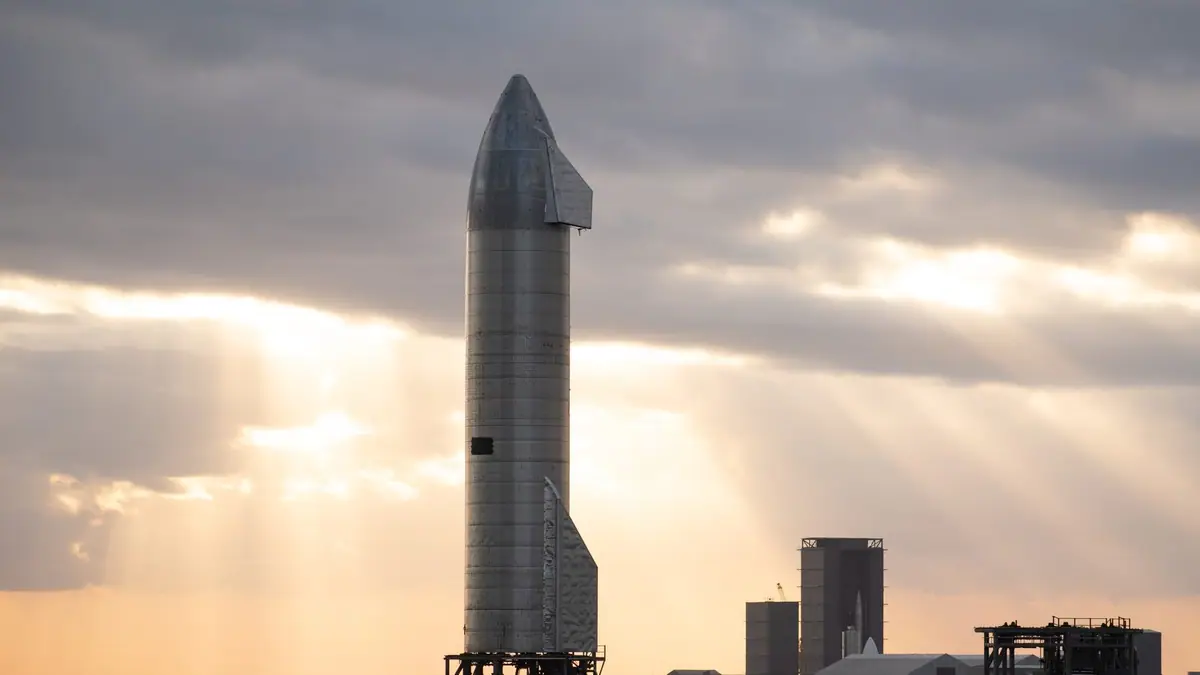
SpaceX caught a Starship upper stage with its launch tower for the first time on Saturday, Nov. 14, at around 4:20 p.m. ET, according to The Verge. The ship came back from orbit, flipped upright and settled between the two arms of the "Mechazilla" tower at Starbase, Texas. The Super Heavy booster did not get the same ending: it aborted its own catch and exploded over the Gulf of Mexico, per Ars Technica and Engadget.
So Flight 15 was a split result. A historic first on one half of the rocket, a failed return on the other.
What happened on Starship Flight 15?
Starship lifted off Friday, Nov. 13, for its 15th test flight, Ars Technica reports. The first stage flew up cleanly and released the ship, which lit its Raptor engines and reached orbit. Ars notes this was only the second time SpaceX has flown Starship into low-Earth orbit.
The main job, according to Ars, was deploying 26 Starlink V3 satellites from a door at the base of the ship. That happened about 40 minutes in, and all 26 reached orbit. Ars called that the primary mission and said it makes Starship an operational orbital rocket.
The ship then stayed up for roughly 22 hours, Engadget reports, before heading back down on Saturday.
Why did the Super Heavy booster explode?
SpaceX has not said. Ars reports that the booster, on its way back to Starbase for a tower catch, was commanded to divert into the Gulf because of an "unspecified issue," and the resulting blast was visible from more than 10 miles away. The Verge adds that SpaceX is still working out what caused the booster to abort its landing and detonate.
It matters because Ars says SpaceX has landed and reflown boosters before, but has not yet done it with the latest version, V3. Until the cause is public, we do not know whether it is a one-off or something that affects the next flight.
How did the ship catch go?
Ars Technica describes the ship falling out of a cloud deck near the very end of its flight, flying horizontally until three Raptor engines lit and swung it upright. The catch margins are tiny: two small nubs on the side of the ship, each sticking out about a foot, were all the arms had to grab, according to Ars. Less than a minute after it came into view, the ship was caught.
Before Saturday, Ars says, SpaceX had made a handful of practice runs into the Indian Ocean, and the catch only goes ahead if the ship passes health checks in orbit and on reentry. Those checks exist because the ship passes over parts of Mexico and the United States on its way back. If it failed them, SpaceX had earlier options to bring it down in an ocean.
What does it mean, and what is still unknown?
The Verge reports that SpaceX has now caught boosters before, and that Saturday was the first time the maneuver worked on the ship itself. Ars frames it as a proof of concept for rapid reuse. It also points to the thing SpaceX still has to prove: the heat shield. Tiles have to survive reentry and then need little work between flights, and that is the hardest part of the reuse plan, according to Ars.
Here is what the reporting confirms and what it does not:
- Confirmed: 26 Starlink V3 satellites deployed, ship caught by the tower, booster aborted and exploded over the Gulf.
- Not confirmed: the cause of the booster problem, the condition of the caught ship, and when Flight 16 will fly.
- Stated goal, not a result: SpaceX wants to fly Starship about 135 times a year within a few years, according to Ars. That is a target.
Ars also says SpaceX has five Starships in an advanced state of development at Starbase and can build an upper stage about every three weeks, with the factory sized for one every three days. Those are the company's capacity figures as reported, not flights that have happened.
On the earnings call, the Verge notes, Elon Musk said "success is not guaranteed on these first flights," but called it more likely than not that the catch would work on the next flight. This time it did for the ship.
Our take
This is our analysis. A ship catch is the harder trick to believe in, and SpaceX did it first try. But a rocket that gets one stage back and loses the other is not yet a reusable system. The booster failure is the open question we would watch before getting excited about launch rates. For U.S. readers watching the schedule, the next launch date will likely depend on what the booster investigation finds, though SpaceX has not said so.
Related reading
Picture credit: Photo: Jared Krahn (CC BY-SA 4.0), file photo