UCLA's 2026 Teens and Screens survey, covered by The Hollywood Reporter, puts YouTube just ahead of TV and movies as a place for stories.
Ask young people which medium can tell a story, and YouTube now comes out on top. That is one finding from the 2026 Teens and Screens report, which The Hollywood Reporter covered this week. The survey, run by the Center for Scholars & Storytellers (CSS) at UCLA, polled more than 1,500 people aged 10 to 24.
YouTube edges past TV and movies
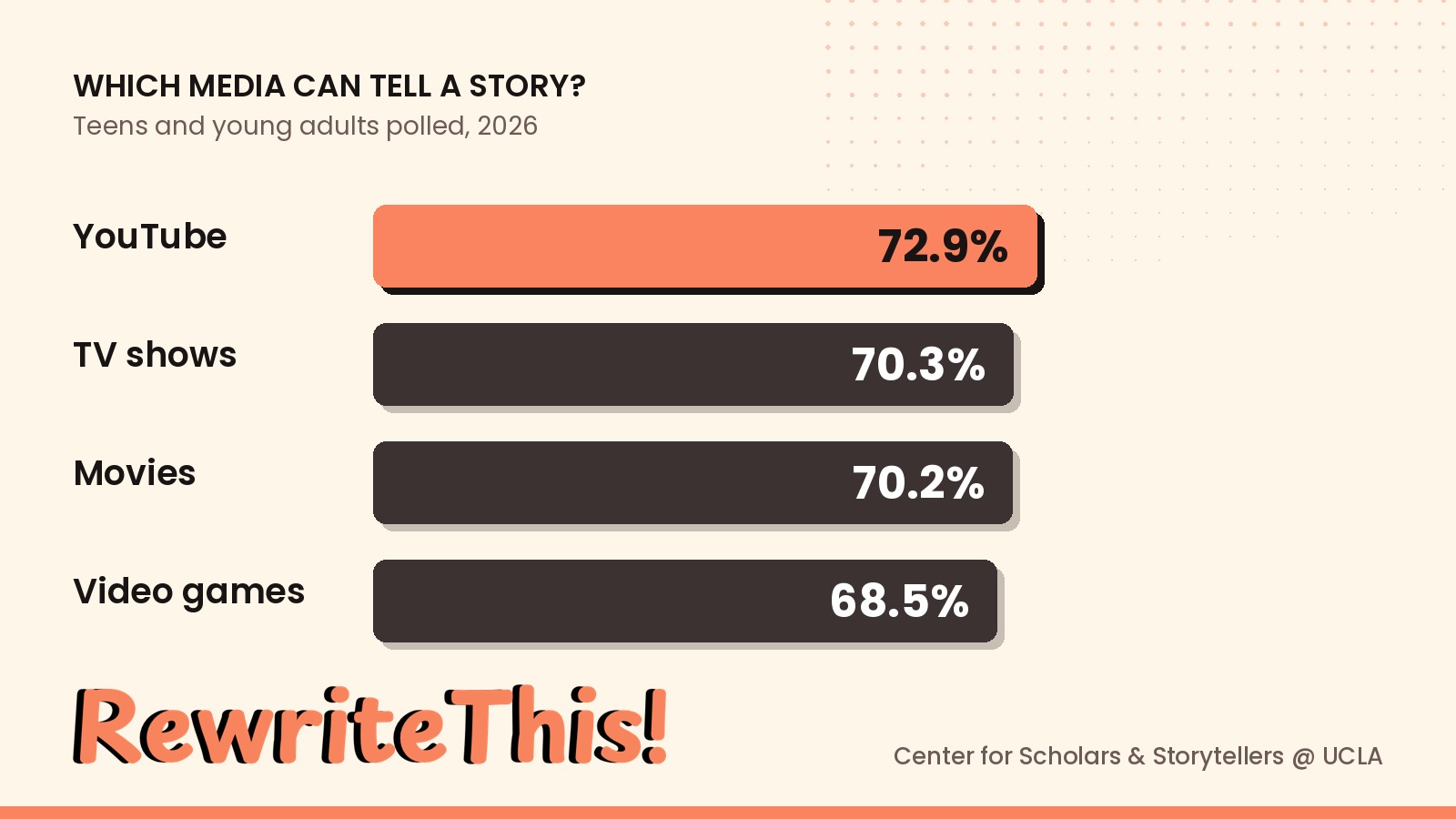
According to the report's own summary, 72.9 percent of respondents said YouTube can tell a story, ahead of TV shows at 70.3 percent, movies at 70.2 percent and video games at 68.5 percent. The gaps are small, so this is a close race rather than a landslide. The CSS site adds that 79 percent said short-form content such as Reels, YouTube and TikTok can tell a story.
The Hollywood Reporter notes that going to the cinema was again the most popular weekend outing for a third year running, ranking above playing a new game, seeing live music, streaming a film at home, bingeing a show or attending a live sports event. The trade publication points out that this is welcome news for Hollywood in a year on track to be the biggest at the box office since the pandemic.
New faces, not influencers
Given how much of this audience grew up on creator content, one result stands out. When asked who they would cast in a TV show or film, 39.8 percent chose a new actor, 38.2 percent a known actor and only 16.8 percent an influencer. Age changes the answer: among 10 to 13-year-olds, 47.1 percent preferred a known actor over a new one (34.5 percent), while among 19 to 24-year-olds the order flipped, with 42.9 percent choosing new faces and 33.4 percent known ones.
On what makes a show feel outdated, slang topped the list at 43.4 percent, ahead of fashion and hairstyles at 36.3 percent and old technology at 35.9 percent.
AI: fascination fades with age
Asked how they feel when watching a story that involves AI, respondents most often picked "fascinated" (28.2 percent) or "excited" (25.6 percent), while 22 percent said "doomed" and 10.1 percent "scared." The report says feelings shift with age, moving from excitement toward doom between the youngest and oldest groups. Male respondents were more positive about AI than female respondents, 34.6 percent versus 23.6 percent.
Respondents also leaned toward hopeful, relatable stories, and 55 percent said they want to see more neurodivergent characters. Only 22.7 percent think current portrayals ring true.
What to keep in mind
Two caveats. This is a survey of self-reported preferences, and the question was about what can tell a story, not how many hours anyone spends watching. The Hollywood Reporter also lists Roblox, YouTube, Hopelab, the Nielsen Foundation and Warner Bros. Discovery as supporters of the study, so readers may want to weigh the YouTube result with that in mind. Nothing in the reporting suggests the supporters shaped the findings.
Our own take, and it is only analysis: for anyone making video, the more useful number may be the 16.8 percent. Young viewers seem to want fresh talent, not a creator slotted into a film for their follower count.
Picture credit: Data: UCLA Center for Scholars & Storytellers. Design: Savvy VibeZ