NASA is taking applications for its next astronaut class until Dec. 3. Who qualifies, what changed for nurses, the pay NPR reports and the timeline.
As of Monday, Nov. 9, 2026, NASA is taking applications for its next class of astronauts, and U.S. citizens have until 11:59 p.m. ET on Thursday, Dec. 3 to apply. The agency announced the opening on Saturday, Nov. 7, and says the people it picks could end up working at a future Moon Base. Applications go through USAJOBS, the federal hiring site, and NPR reports a starting salary of $164,395.
The hard part is the odds. Here is who can apply, what the job requires, and what the timeline looks like from here.
Who can apply to be a NASA astronaut?
Any U.S. citizen who meets the basic requirements can apply, and NPR notes there is no official age limit. According to NASA's announcement, you need a master's degree in a STEM field such as engineering, biological science, physical science, computer science or mathematics, plus at least three years of related professional experience after finishing that degree.
NASA lists several ways to meet the degree rule without a standard master's:
- Two years of work toward a doctoral program in a technical field.
- A completed medical degree, including M.D., D.O., physician assistant, Doctor of Nursing Practice or family nurse practitioner.
- A nationally recognized Test Pilot School program, finished by July 2027.
Pilots can count flight time instead of years at a desk: 750 hours as pilot in command in a high-performance jet, 1,500 total hours in other fixed-wing aircraft (750 as pilot in command), or 1,000 hours in helicopters (300 as pilot in command). Doctors can count residency, which has to be finished by July 2027. Everyone must also pass NASA's long-duration astronaut flight physical.
One change is worth knowing about. NASA spokesperson Anna Schneider told NPR that master's-level nursing degrees now meet the minimum education requirement, when nursing degrees were previously excluded from NASA's STEM definition.
What happens after you apply?
NASA says its Astronaut Selection Board reviews the applications, invites a small group to interviews at Johnson Space Center in Houston, and then brings about half of those people back for a second round. The agency expects to make its final selection in late 2027. The Associated Press reports the new candidates would begin training by early 2028, and NPR says that training lasts two years.
That timing lines up with the agency's goal of landing astronauts on the Moon again in 2028, the first time since 1972, according to NPR. NASA says the next class will train for work near the lunar South Pole and for living and working at the Moon Base it plans to build.
How hard is it to get in?
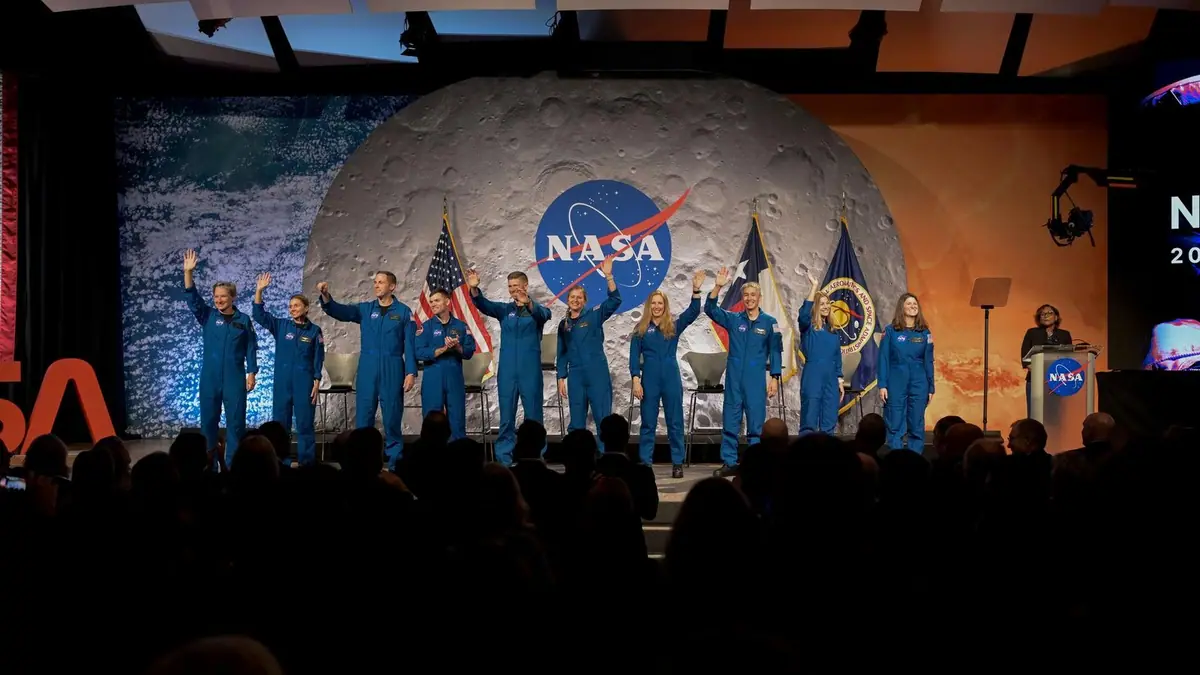
Very. NASA last opened applications in 2024, received more than 8,000, and chose 10 candidates, who were announced on Sept. 22, 2025 and are still in training. That works out to roughly one selection for every 800 applicants, and since the 8,000 figure is a floor, the real odds were a little longer. NASA has 32 active astronauts today and has picked 370 people for astronaut training since the program began.
NASA has not said how many people it plans to select this time. That is the biggest unknown, and it matters if you are trying to judge your chances.
Confirmed and not confirmed
- Confirmed by NASA: applications are open, the deadline is 11:59 p.m. ET on Dec. 3, and final selection is expected in late 2027.
- Confirmed by NASA: the master's, experience, pilot, medical and physical requirements listed above.
- Reported by NPR: the $164,395 starting salary and the nursing-degree change, the latter attributed to a NASA spokesperson.
- Not announced: the size of the class, and any date for the first astronauts to move onto the lunar surface beyond the 2028 target.
Our take
If you are even halfway qualified, apply. The window is 24 days, the paperwork is federal-job paperwork, and the experience requirement is what usually trips people up, so check your dates before you start. Nurses with a master's degree are the quiet winners of this round. The honest warning is that a 2028 Moon landing is a target, not a promise, and a class selected in late 2027 will spend its first two years in training before it goes anywhere.
Related reading
Picture credit: NASA