
A Lime bike joust in east London sparked The Guardian's look at why fashion, pop and film are borrowing so heavily from the middle ages.
This week in east London, two men jousted on Lime bikes using PVC pipes for lances. It sounds like a joke, and partly it is. But The Guardian argues it is also one small piece of a bigger pattern: young people, artists and fashion houses are borrowing hard from the middle ages.
Where the medieval look is showing up
According to The Guardian, the bike joust was part of a show called Feast of Fools, staged by the artist Corbin Shaw during the Frieze art fair. Shaw told GQ it was inspired by a medieval festival where "the peasant class could insult the rich." The paper also points to Troye Sivan's video for his song Party, in which the pop star plays a medieval knight, and to catwalks at Givenchy, Louis Vuitton and Max Mara, where wimples and chainmail have fed what some call "medievalcore."
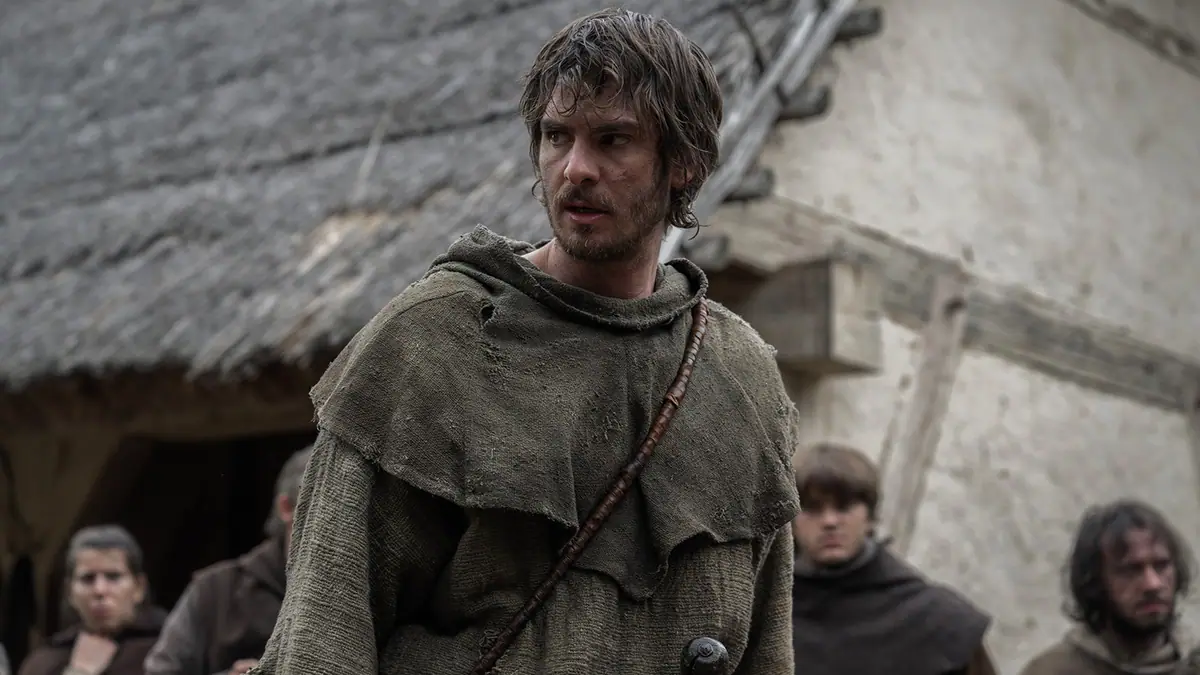
Cinema is part of it too. Paul Greengrass's film The Uprising, a retelling of the 1381 Peasants' Revolt, stars Andrew Garfield as a nameless Ploughman who takes his grievances to London. Focus Features describes it as a rebellion against the tyranny of King Richard II, set against true events.
Why now, according to the experts
The Guardian quotes several academics and analysts, and they do not agree on one neat explanation. Simon Trafford of the University of London's Institute of Historical Research says the period "is always there," and that the real question is which bit of it people choose to borrow. Marion Turner, an Oxford professor, says much of the current use is playful and is not claiming to show what the era was really like.
Cultural analyst Bridget Dalton calls it "fun," adding that it can be camp, macho and sexy at once. She also describes a strand she labels "wenchcore," a looser, more ribald picture of womanhood and masculinity.
There is a political edge as well. Turner draws a parallel between the Peasants' Revolt, which came a generation after the plague, and today's post-Covid mood, in which people "just don't want to put up with what they used to." She offers a second comparison between the arrival of printing then and the internet and AI now. Shaw says he wants to take English symbols back, and Dalton says medieval imagery lets young people talk about Britain "without flying a St George."
Our take
This is analysis, not reporting. Trend stories like this one are easy to over-read, and a few catwalk looks and one bike joust do not make a youth movement. Still, the appeal is easy to understand. The middle ages are far enough away to be a costume and close enough to feel like a mood. Trafford's warning, that you can always cherrypick the bits that suit your cause, applies as much to the left as to the right, and it is a good thing to remember the next time a trend claims to be about history.
Picture credit: Focus Features (The Uprising)