The BBC's Blue Planet III is leaving plankton, murk and buoys in shot to show its animals are real, The Guardian and The Verge report.
Nature films have spent decades getting cleaner. Blue Planet III is going the other way on purpose. According to The Guardian, the BBC series is keeping cloudier, less polished footage in the final cut so viewers can see its animals are real and not AI-generated. The Verge picked up the story on Saturday.
Plankton, buoys and murky water stay in
Executive producer Elizabeth White told The Guardian that AI "makes us want to be even more authentic." In earlier series, she said, the amount of plankton drifting through a sequence would often have got a shot cut. The team might also have framed out a boat or a buoy, or dropped a scene because the water conditions were not good enough.
This time those shots are left in. "As AI booms we will probably lean more into the more organic," White said, according to the paper. The Verge's reading is that a too-smooth, seamless picture is now one of the giveaways of AI video, so a bit of mess works as proof.
The BBC's head of specialist factual commissioning, Jack Bootle, went further at a press screening. "No gen AI was used in this series. Not a single frame. It's all real photography," he told journalists, The Guardian reports.
What the series is built around
Narrated by Sir David Attenborough, Blue Planet III returns 25 years after the original series. Per The Guardian, filming took four years across five oceans. The crews used a "mini-dome" camera to follow an octopus, a "deep-sea selfie stick," and lasers to film creatures in the deep. There is also what the paper calls the world's first underwater CCTV camera, nicknamed "stonefish" cam.
The behaviour on screen includes dolphins plugging coral holes with sea sponges to trap fish, a grouper communicating with another species of fish, 200,000 crabs lining up to feed, and sea urchins using shells as sun hats. Series producer Lara Bickerton said the team "continually innovated" over the shoot. The Guardian adds that the series also covers warming seas killing the anemones clownfish live in, and pollutants and forever chemicals.
Attenborough, who is 100, was "very much involved" and made changes to scripts, according to producer and director Yoland Bosiger.
Our take
This is analysis, not reporting. Promising "real photography" is easy to say and hard for a viewer to check, and murky water is not a guarantee of anything by itself. Still, the idea is a smart one. If clean, flawless footage can now be faked in minutes, a visible speck of plankton becomes a small mark of trust, and it costs the BBC nothing but a little polish.
Blue Planet III starts Sunday 1 November on BBC1 and iPlayer, per The Guardian.
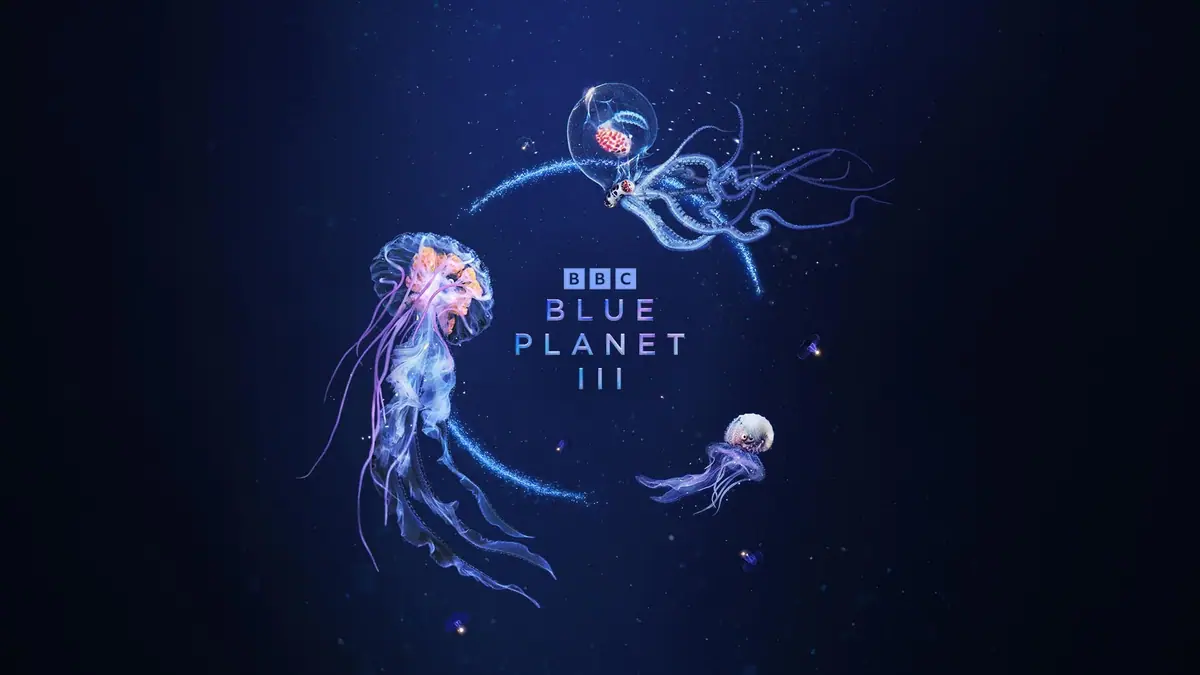
Picture credit: BBC Studios / BBC Earth