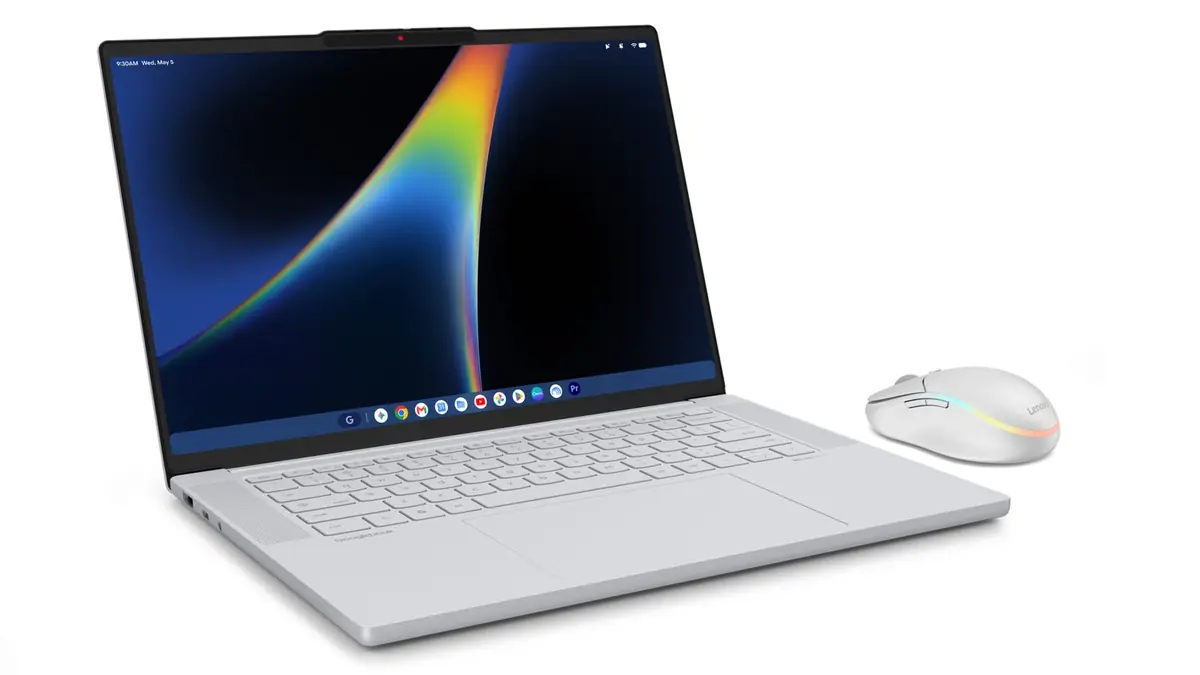
The Lenovo Googlebook 15 starts at $1,099 in the U.S. Engadget scores it 7.9 out of 10. Here is who should buy it and who should wait.
The Lenovo Googlebook 15 is on sale in the U.S. from $1,099, and as of Oct. 30, 2026 a new review published today by Engadget gives it a 7.9 out of 10. That score belongs to Engadget, not to us. Its verdict is that the hardware is excellent and the Googlebook OS software still needs work, so it is a better fit for people who already live on an Android phone.
How much does the Lenovo Googlebook 15 cost in the U.S.?
Lenovo's laptop starts at $1,099, according to Google's own Googlebook shop page, and Lenovo's press release put the starting price at $1,099.99 with U.S. availability from Oct. 4. PCWorld tested a $1,149.99 configuration with 512GB of storage and lists the range as $1,099.99 to $1,149.99. Lenovo's launch release also says the laptop can be configured with up to 32GB of memory and up to 512GB of storage.
Google's shop page lists the rest of the first Googlebook wave like this: the Acer Googlebook 14 from $899, the Dell XPS Googlebook from $999, the ASUS Googlebook 14 from $1,299 and the HP Googlebook 14 from $1,299. PCWorld lists the HP model at $1,199, so check the retailer page before you pay. Ars Technica noted in its review on Oct. 16 that Acer's $899 price is a limited-time deal. Acer has not said when it will change, but Ars reports it holds through the end of the year at least.
Google's page also advertises extra perks for eligible buyers, including a Google AI Pro trial it values at $249.99 and up to $290 in bundled apps. Both are limited-time offers with terms, so read them before you count them as savings.
What did Engadget like and dislike about it?
Engadget praised the build first. The 15.3-inch OLED screen runs at 120Hz with a typical brightness of 500 nits, and the review says the machine weighs 2.85 pounds, a little less than a 14-inch MacBook Pro at 3 pounds. It has two USB-C ports, a USB-A port, HDMI and a headphone jack, plus up-firing quad speakers and a large haptic touchpad.
Performance is fine for everyday work. With an Intel Core Ultra 5 325, 16GB of RAM and 256GB of base storage, Engadget measured a Geekbench 7 multi-core score of 9,011, ahead of the 7,124 it recorded for a midrange Dell XPS 13. The catch is that most of that power goes unused when you are mostly running phone apps.
Battery life was the other weak spot. Engadget's video-playback drain test lasted eight and a half hours, though the laptop got through an eight-hour workday with about 20 percent left. Lenovo's own claim is up to 12.5 hours, a figure its press release attaches to a footnote about test conditions.
What are the problems with Googlebook OS right now?
Engadget's main complaint is app quality. The Play Store labels apps on a five-step scale from "Made for desktop" to "Built for mobile," and the reviewer found that sorting out which apps behave takes trial and error. Photoshop is the example: the Play Store version is the mobile edition, not the full desktop program. Some apps leave strips of wallpaper showing on each side of the window.
The phone connection is the best part, but it has limits. Engadget says file transfers by drag and drop are capped at 200MB, and casting a game from the phone drops frames. It also says some of Google's phone-linking features were missing for Samsung owners at launch. PCWorld, which found the experience frustrating, says the Samsung phones that are supported need Android 17 to connect.
PCWorld was harsher. Its headline reads "I'm glad that's over," and it argues that a Chromebook Plus or a Windows PC does nearly as much for less money. Ars Technica reached a similar place on Oct. 16, writing that these laptops almost never feel like a premium laptop. Three outlets, one shared complaint: the software is not finished.
Should you buy it now or wait?
Our take: buy it only if two things are true. You use an Android phone, ideally a recent Pixel, and your daily work lives in a browser and Google's apps. If you need desktop software like the full Adobe apps, or you use a Samsung phone that has not reached Android 17, a Windows laptop or a MacBook Air is the safer pick at this price. Ars Technica made that MacBook Air comparison itself for anything around $1,300.
If the 15-inch screen is the draw, the Lenovo is the only one in the first wave with that size, and its HDMI port and USB-A port are rare on thin laptops. If you only want to try the platform, the $899 Acer is the cheaper way in while its limited-time price lasts.
What is confirmed: the U.S. start date, the starting prices on Google's page and Lenovo's release, and Engadget's 7.9 score. What is not: whether future software updates fix the app and Samsung problems, and whether Acer's price stays after this year. Reviewers disagree on the HP price, so treat that one as unsettled.
Related reading
Picture credit: Lenovo